When a teenage driver crashes a parent’s car in Massachusetts, the teen may be responsible for negligent driving. A parent may also face liability as the registered owner or for knowingly entrusting a vehicle to an unfit driver. The outcome depends on the evidence, applicable law, and insurance coverage. If you suffered injuries in a collision involving a teen driver, Hoey Law can help you investigate who may be responsible and what compensation may be available.
Who Is Liable When a Teen Driver Crashes a Parent’s Car?
A teenager who causes a crash through careless driving can face a negligence claim. A parent does not become personally liable simply by being a parent, but registered ownership and the parent’s own conduct may create additional questions. The family automobile insurance policy can be a source of compensation, although permission, driver disclosures, and policy provisions matter.
For example, a 17-year-old driving through North Reading, Massachusetts, might fail to stop at an intersection and strike another vehicle. The injured driver could have medical bills, lost wages, and continuing pain. Investigating the collision would involve more than identifying the teenager behind the wheel: it would also require reviewing registration, permission, insurance, and any other contributing negligence.
Can a Teenage Driver Be Held Liable for a Car Accident?
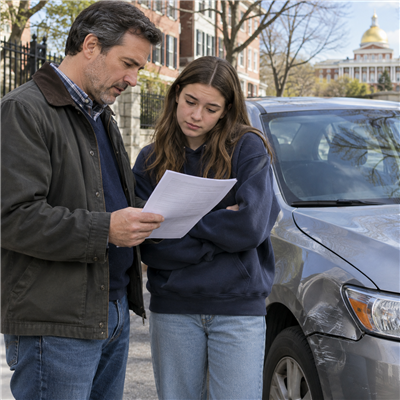
Yes. Teenage drivers must exercise reasonable care while driving. If a teenager breaches that duty and causes harm, the injured person may have a negligence claim. Examples of conduct that can support a claim include:
- Texting or using a phone while driving.
- Speeding or driving too fast for traffic or weather conditions.
- Failing to yield or obey a traffic signal.
- Following another vehicle too closely.
- Driving while distracted, fatigued, or impaired.
A claim generally requires evidence of a duty of care, a breach of that duty, causation, and resulting damages. The driver’s age does not automatically excuse unsafe driving. Insurance often plays a central role in paying a covered claim, even when the teen has limited personal assets.
Are Parents Automatically Responsible for Their Teen’s Car Accident?
No. A parent is not automatically personally liable solely because the driver is their child. Massachusetts General Laws Chapter 231, Section 85A addresses a different issue: when a vehicle involved in a collision is registered to a defendant, that registration is prima facie evidence that the driver was someone for whose conduct the owner was legally responsible.
This is a rebuttable evidentiary rule, not a final ruling that every registered owner must pay damages. The owner can raise and prove a defense showing the absence of legal responsibility. For example, evidence about the purpose of the trip and the relationship between the driver and owner may matter.
You can read the statute at https://malegislature.gov/Laws/GeneralLaws/PartIII/TitleII/Chapter231/Section85A.
Vehicle registration can matter in a Massachusetts accident claim, but ownership and parental status do not automatically establish final liability.
When Can Negligent Entrustment Make a Parent Responsible?
A parent or other vehicle owner may be directly liable for negligent entrustment when the evidence establishes that the owner allowed an incompetent or unfit person to drive, actually knew about the driver’s unfitness, and that unfitness caused the injury. Permission to drive is another required part of the claim.
Consider a parent who knows that a teenager has repeatedly driven recklessly but still allows that teenager to use the family car. If the known driving problem contributes to a collision, the decision to provide the vehicle may support a negligent entrustment claim.
A teenager’s age, limited experience, or a single traffic citation does not automatically prove negligent entrustment. In Picard v. Thomas, the Massachusetts Appeals Court emphasized the owner’s actual knowledge of unfitness at the time permission was given.
The legal discussion is available at https://law.justia.com/cases/massachusetts/court-of-appeals/volumes/60/60massappct362.html.
Does a Parent’s Car Insurance Cover a Teenage Driver?
A parent’s Massachusetts automobile policy may provide coverage when a teenager drives the insured vehicle with permission. The precise answer depends on the policy, applicable mandatory and optional coverages, and the circumstances of the collision. Coverage should not be assumed without reviewing the policy.
Massachusetts insurance guidance states that licensed household members and other licensed people who customarily drive the vehicle must be listed on the policy. When a household teenager gets a driver’s license, the teen or parent must notify the insurer within 60 days. Incomplete driver information can cause disputes, especially regarding optional coverages.
For Massachusetts automobile policies issued or renewed on or after July 1, 2025, the updated minimum compulsory limits include:
- Bodily injury to others: $25,000 per person and $50,000 per accident.
- Bodily injury caused by an uninsured automobile: $25,000 per person and $50,000 per accident.
- Damage to someone else’s property: $30,000 per accident.
These figures describe minimum coverage categories, not an automatic payment or a cap on every possible claim. Different coverage parts respond to different losses, and optional policies may provide additional protection. You can review the state’s explanation at https://www.mass.gov/info-details/massachusetts-law-about-auto-insurance and its teen-driver guidance at https://www.mass.gov/info-details/tips-for-teen-driving.
To learn more about representation after a collision, visit https://www.lawhoey.com/massachusetts-car-accident-lawyer/.
What If the Teen Took the Car Without Permission?
A lack of permission may affect an owner’s legal defenses and the available insurance. The distinction between authorized and unauthorized use can be contested. An insurer or court may examine whether the teen had regular access to the keys, whether prior use was allowed, and whether any restrictions were communicated and followed.
A parent’s statement that the teen took the car without permission does not, by itself, resolve every issue. The policy language and the evidence surrounding the actual use require careful review.
Can Another Driver or Party Share Responsibility?
Yes. A teenager may be involved in a crash without causing all of it. Another driver might run a red light, make an unsafe turn, or otherwise contribute. In some circumstances, a vehicle defect or another contributing condition also warrants investigation.
Under Massachusetts General Laws Chapter 231, Section 85, an injured person’s negligence generally does not prevent recovery unless it is greater than the total negligence of the person or persons against whom recovery is sought. An award is reduced in proportion to the injured person’s share of negligence.
The rule is available at https://malegislature.gov/Laws/GeneralLaws/PartIII/TitleII/Chapter231/Section85.
What Compensation May Be Available After a Teen Driver Crash?
If you suffered injuries because of negligent driving, the damages available to you depend on the facts, applicable law, and supporting evidence. Depending on the claim, damages may include:
- Emergency care, hospitalization, physical therapy, and other medical expenses.
- Future treatment related to lasting injuries.
- Lost income and diminished future earning capacity.
- Physical pain and suffering, subject to applicable Massachusetts automobile injury rules.
- Emotional distress and reduced enjoyment of life where legally recoverable.
- Vehicle repair expenses and other documented property losses.
Massachusetts automobile claims can also involve Personal Injury Protection benefits and statutory thresholds relevant to certain pain and suffering claims. If a collision causes a death, a personal representative may be able to pursue a wrongful death claim under Chapter 229, Section 2.
You can learn more about the firm’s experience at https://www.lawhoey.com/case-highlights/ and its team at https://www.lawhoey.com/our-team/. Past results do not predict future outcomes.
How Long Do You Have to File a Massachusetts Car Accident Lawsuit?
Many Massachusetts personal injury lawsuits arising from car crashes must be filed within three years after the claim accrues, under Massachusetts General Laws Chapter 260, Section 2A. Wrongful death claims generally have a three-year deadline under Chapter 229, Section 2, but the date from which that period runs can differ.
Exceptions, special rules, and shorter notice or insurance reporting requirements may apply. Early investigation can also help preserve photographs, witness accounts, electronic records, and other evidence.
You can review the personal injury limitations statute at https://malegislature.gov/Laws/GeneralLaws/PartIII/TitleV/Chapter260/Section2A.
What Should You Do After an Accident Involving a Teen Driver?
If you are injured in a collision involving a teenage driver, these steps can help you address immediate needs and preserve information:
- Seek medical evaluation and follow recommended treatment.
- Report the crash to the appropriate authorities and obtain available report information.
- Photograph the scene, vehicle damage, and visible injuries when it is safe to do so.
- Record witness contact details and the teen driver’s name, vehicle registration, and insurance information.
- Keep medical bills, wage records, repair estimates, and correspondence with insurers.
- Consider legal advice before making assumptions about a parent’s personal liability or the limits of available insurance.
An attorney can investigate the driver, registered owner, and other potentially responsible parties, assess coverage, and evaluate whether a settlement or lawsuit fits the facts.
Frequently Asked Questions About Teen Driver Accidents
Can Parents Be Sued If Their Teenager Crashes the Family Car?
Parents may be included in a claim when there is a legal basis, such as the registered-owner rule or negligent entrustment. Whether they are ultimately liable depends on the evidence and applicable law.
Does a Teenager Need Separate Auto Insurance in Massachusetts?
Not necessarily. A teenager may be insured through a parent’s policy, but the family must comply with the policy’s driver disclosure requirements and applicable Massachusetts rules.
Can You Recover Compensation If the Teenage Driver Has No Assets?
Potentially. Applicable automobile insurance or other responsible parties may offer sources of recovery. The available amounts depend on the policy and the circumstances of the claim.
What Happens If the Teen Violated a Junior Operator Restriction?
A restriction violation may be relevant to negligence if it contributed to the crash. It does not automatically make a parent personally liable or determine whether an injured person will recover damages.
Speak With a Massachusetts Car Accident Attorney
If you were injured when a teenage driver crashed a parent’s car, you deserve a clear explanation of the potential sources of responsibility and insurance coverage. Hoey Law represents injured people in Massachusetts, including North Reading and nearby communities. Attorney David J. Hoey and the firm handle serious injury matters and can evaluate the circumstances of your collision.
Contact the firm for guidance.lawhoey.com/contact-us/ to discuss your situation and legal options. You can also review the firm’s Massachusetts car accident services at https://www.lawhoey.com/massachusetts-car-accident-lawyer/.
This article provides general information, not legal advice. A lawyer can assess the rules and deadlines that apply to your circumstances.