Rainy fall weather can raise car accident risks across Massachusetts because several hazards can appear at the same time. Wet pavement can reduce traction, pooled water can contribute to hydroplaning, wet leaves can cover road markings or pavement defects, and rain, road spray, glare, and earlier sunsets can reduce visibility.
Massachusetts law requires drivers to use headlights and taillights when windshield wipers are needed. Weather alone does not decide who is responsible for a collision. A claim may turn on whether a driver adjusted speed, following distance, lane position, braking, and other driving decisions to the conditions.
If you were injured in a Massachusetts car accident, Hoey Law can help you understand questions involving fault, insurance coverage, medical expenses, lost income, evidence preservation, and filing deadlines.
Learn more about Massachusetts car accident claims:
https://www.lawhoey.com/massachusetts-car-accident-lawyer/
Why Fall Rain Can Make Massachusetts Roads More Dangerous 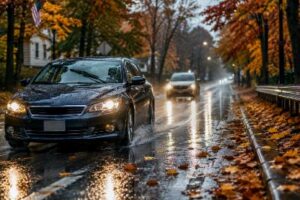
Fall rain can change Massachusetts road conditions quickly. A road that is dry during a morning drive can become wet, leaf-covered, and harder to see later in the day. Water may collect in low areas or where drainage is limited, while fallen leaves may gather near curves, intersections, shoulders, and neighborhood streets.
Rain can make a road slicker and can reduce a driver’s ability to stop or control a vehicle. The National Highway Traffic Safety Administration advises drivers to slow down on wet roads and increase following distance because slick conditions can make vehicles harder to control or stop.
That extra space matters near traffic lights, crosswalks, highway ramps, construction areas, and congested intersections. A driver who follows too closely may have less time to react when traffic slows or stops.
Key point: Rain may explain the road conditions, but it does not assign legal fault. The actions of each driver still matter.
Hydroplaning and Standing Water
Hydroplaning can occur when a vehicle’s tires lose effective contact with the pavement because of water on the road. When that happens, steering and braking may become less responsive. Speed, tire condition, water depth, and the roadway surface can all affect the risk.
Standing water creates a separate hazard because you may not be able to judge its depth or see what is underneath it. A puddle can hide a pothole, depression, debris, or drainage problem. Entering pooled water too quickly may cause a loss of control, reduce braking ability, or create spray that limits visibility for nearby drivers.
MassDOT advises motorists to use caution in rain, watch for hydroplaning in pooled water, and avoid driving into puddles when the depth is unknown.
After a hydroplaning or standing-water crash, evidence may include:
- Photographs or video of pooled water and the roadway
- Tire condition and tread information
- Vehicle maintenance records
- Estimated speed and braking information
- Lane position and vehicle damage
- Witness statements
- Dash camera or nearby surveillance footage
These details may help show what conditions were visible before the collision and how each driver responded.
Wet Leaves Can Hide Road Hazards
Wet leaves can create a slippery surface and can also cover lane markings, pavement edges, potholes, debris, or standing water. The risk can be greater on curves, hills, shaded streets, and residential roads where leaves collect near the travel lane.
If you are driving on a leaf-covered road, slower speeds, more following distance, and gradual steering and braking can give you more room to respond to changing traction.
After a crash involving wet leaves, fault may depend on ordinary driving decisions. Investigators may look at whether a driver reduced speed, maintained a reasonable following distance, stayed within the travel lane, and kept the vehicle under reasonable control for the conditions.
Rain, Road Spray, Glare, and Earlier Darkness Reduce Visibility
Rain, road spray, glare, and earlier darkness can make pedestrians, bicyclists, lane markings, traffic signals, and stopped vehicles harder to see. Spray from a truck or bus can briefly obscure a windshield, while reflections from headlights and streetlights can make wet pavement harder to read.
Massachusetts law requires headlights and taillights to be turned on when windshield wipers are needed because of weather. The law also requires lights when visibility is reduced so that people or vehicles on the roadway are not clearly visible at 500 feet.
When visibility is reduced, drivers may need to slow down, increase following distance, avoid abrupt lane changes, and leave enough visible roadway ahead to stop safely.
Common Rain-Related Car Accident Patterns
Rain-related car accidents in Massachusetts can involve many collision patterns. Weather may contribute to the circumstances, but the conduct of the drivers remains central to a fault analysis.
Common patterns include:
- Rear-end collisions when a driver follows too closely on wet pavement
- Intersection crashes when stopping distance increases or visibility decreases
- Sideswipe collisions when road spray, glare, or covered lane markings make lane position harder to judge
- Loss-of-control crashes on curves, ramps, hills, or roads with pooled water
- Multi-vehicle collisions after sudden braking in congested traffic
- Pedestrian or bicycle collisions when rain and darkness reduce visibility
A police report may document the weather and road surface, but photographs, video, witness accounts, vehicle data, and physical evidence can provide additional detail about what happened before impact.
How Massachusetts Comparative Negligence Can Affect a Rainy-Weather Claim
Massachusetts uses a modified comparative negligence rule. You may recover damages in a negligence case when your share of negligence is not greater than the total negligence attributed to the person or people from whom you seek recovery. Any damages awarded are reduced in proportion to your percentage of negligence.
This rule can matter in a rainy-weather crash because an insurer may argue that more than one driver made a mistake. One driver may have followed too closely while another changed lanes without enough space. A driver may also have been traveling below the posted speed limit but still moving too fast for heavy rain, poor visibility, or standing water.
Evidence that may help address comparative negligence includes:
- Scene photographs and video
- Witness statements
- Police observations
- Dash camera footage
- Business or residential surveillance video
- Vehicle damage
- Electronic vehicle data when available and lawfully obtained
- Roadway evidence
- Weather information tied to the time and location of the crash
What Evidence Should You Preserve After a Rainy-Weather Crash?
Evidence after a rainy-weather crash can change quickly. Rain stops, water drains, leaves move, vehicles are towed, and the roadway may look different several hours later.
If your health and safety allow, consider preserving:
- Photographs and video of the roadway, pooled water, wet leaves, lane markings, signs, traffic signals, and vehicle positions
- Close photographs of vehicle damage and visible tire condition
- Names and contact information for witnesses
- Dash camera footage
- Information about nearby businesses, homes, or traffic cameras that may have recorded the crash
- Police report and crash exchange information
- Medical records, bills, and treatment instructions
- Towing bills, repair estimates, rental vehicle expenses, and other accident-related costs
- Wage and employment records showing missed work or reduced earnings
- Insurance letters, emails, requests for recorded statements, and settlement offers
You can learn about Attorney David J. Hoey at:
https://www.lawhoey.com/about-david-hoey/
Meet the Hoey Law team:
https://www.lawhoey.com/our-team/
Review reported case results:
https://www.lawhoey.com/results/
Past results do not predict the outcome of a new matter.
Massachusetts Crash Reporting Rules
Massachusetts requires a Motor Vehicle Crash Operator Report when a collision results in death, injury, or more than $1,000 in damage to any one vehicle or other property. The operator generally must file the report with the Registry of Motor Vehicles within five days after the crash and send a copy to the police department with jurisdiction over the road where the crash occurred.
The reporting rule includes an exception while a person is physically incapable of making the report. If the operator is not the owner and is physically incapable of filing, the vehicle owner has a reporting duty under the statute based on the information available to the owner.
A crash report is separate from an insurance claim. You should also review your policy and insurer instructions so that you understand any notice or documentation requirements that may apply.
Keep copies of documents you submit after a collision.
Additional Hoey Law legal resources are available at:
https://www.lawhoey.com/client-resources/
PIP and Other Massachusetts Auto Insurance Issues
Massachusetts auto insurance includes compulsory Personal Injury Protection, commonly called PIP. PIP can cover medical expenses and certain other accident-related losses, including up to 75 percent of lost wages and replacement services, subject to policy terms and an $8,000 per-person limit.
Medical payment rules can depend on whether you have private health insurance and on the type of expense involved. PIP also does not necessarily address every financial loss caused by a serious crash.
Depending on the facts and available insurance, you may have questions involving:
- Bodily injury claims
- Uninsured or underinsured motorist coverage
- Collision coverage
- Medical expenses
- Lost income or reduced earning capacity
- Replacement services
- Other accident-related damages
Insurance questions can become more complicated when several vehicles are involved, responsibility is disputed, or multiple policies may apply. Organized medical, employment, repair, and insurance records can help document how the collision affected you.
How Long Do You Have to Bring a Massachusetts Injury Claim?
Massachusetts generally requires tort actions involving personal injuries to be filed within three years after the cause of action accrues. Different deadlines, notice requirements, or exceptions can apply depending on the type of claim, the identity of the defendant, and the facts.
The legal deadline is not the only reason to begin an investigation promptly. Surveillance video may be erased, witnesses may become harder to locate, vehicles may be repaired, and temporary roadway conditions may disappear.
Early evidence preservation can help document the scene while photographs, witness memories, vehicle damage, and weather-related conditions are still available.
What Should You Do After a Rain-Related Car Accident?
After a rain-related car accident, your health and immediate safety should come first. Call 911 when someone is injured, traffic is blocked, or the collision creates a continuing danger. Follow instructions from police officers, firefighters, and medical personnel.
When your condition allows:
- Exchange driver, vehicle, and insurance information
- Photograph the vehicles and roadway
- Record pooled water, wet leaves, lane markings, signs, and visibility conditions
- Collect witness names and contact information
- Seek medical attention for concerning symptoms
- Follow medical recommendations
- Keep medical bills, repair records, wage records, and insurance correspondence
- Save photographs, video, and digital files in more than one location
- Review any settlement release carefully before signing it
A broad settlement release can end legal rights connected to a claim. Before signing one, make sure you understand which claims the release covers and whether your injuries, treatment needs, and financial losses are sufficiently known.
Speak With a Massachusetts Car Accident Attorney
A rainy fall collision can leave you managing medical treatment, vehicle repairs, missed work, and insurance questions while evidence at the scene is already changing. Hoey Law can review the circumstances, explain the Massachusetts rules that may apply, identify evidence that may need to be preserved, and discuss available legal options based on the facts.
Hoey Law represents injured people and families throughout Massachusetts from its North Reading office. Attorney David J. Hoey has handled civil litigation and serious injury matters for decades.
Call Hoey Law at (978) 662-8868:
tel:+19786628868
Request a consultation:
https://www.lawhoey.com/contact-us/
This article is for general informational purposes only. It is not legal advice, does not create an attorney-client relationship, and should not replace advice from an attorney about your specific circumstances.